38 Closed Primary Schools in the Philippines Due to Fewer Students
The Impact of School Closures on Students and Communities
In recent years, a significant number of primary schools in England have faced closure due to declining student numbers. Nearly 40 state primary schools across the country have shut their doors over the past two years, leaving many parents scrambling for alternative placements. This trend has resulted in some students traveling longer distances to attend school, further complicating their daily routines.
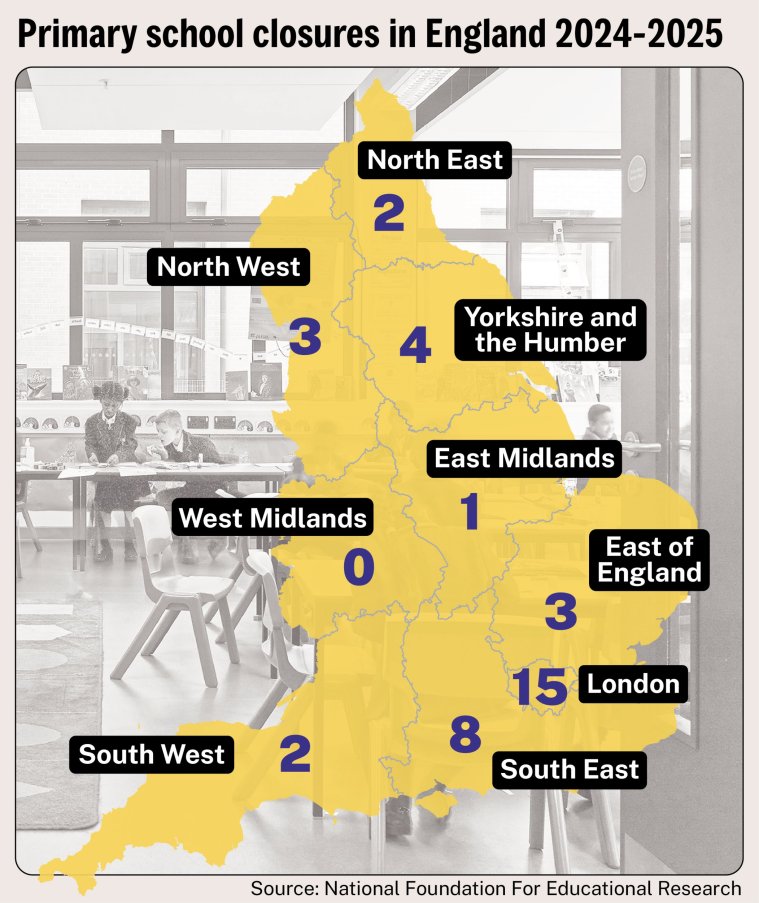
Schools in England are funded based on the number of pupils they serve, which means that a decrease in enrollment directly affects the availability of resources and staffing. As birth rates decline, this funding model becomes increasingly challenging for schools to sustain. According to exclusive data from the National Foundation for Educational Research (NFER), 38 primary schools have closed since 2024. This situation is not limited to one region but is spread across various areas, with London being particularly affected.
Regional Disparities in School Closures
The NFER data highlights that 15 schools in London have closed since 2024. These closures include three in Islington, three in Haringey, three in Wandsworth, two in Greenwich, two in Hackney, one in Southwark, and one in Merton. Other regions such as North Yorkshire, Brighton and Hove, Hertfordshire, and Hampshire have also experienced closures, with four, three, two, and two schools respectively closing during the same period.
Families moving out of expensive cities to avoid rising house prices have contributed to this issue. Inner-city schools, often serving vulnerable populations, are disproportionately impacted by funding shortfalls and subsequent closures. This migration pattern has created an uneven distribution of resources and opportunities among different communities.
Challenges for Special Needs Students
One of the most pressing concerns is the impact on children with special educational needs and disabilities (SEND). A teacher at a primary school in Islington, which closed in August, reported that several SEND children had not yet found new placements by the end of the summer term. Phoebe Oakley, a former teacher at Highbury Quadrant Primary School, shared that other local schools lacked the capacity and resources to accommodate these students.
“Many of our children with complex needs were left behind because the schools were already at capacity,” Oakley said. Some children who previously had a five-minute walk to school now face commutes of over 20 minutes, with some traveling to different boroughs.
Islington Council promised to support all pupils with placements at nearby schools and provided additional resources through Drayton Park Primary School, a specialist unit within a mainstream school. However, some parents declined the offered placements, highlighting the ongoing challenges in finding suitable options for these students.
Future Projections and Concerns
School leaders warn that closures are likely to continue unless action is taken. Projections indicate a 2% drop in pupils between 2025/26 and 2027/28. The Institute for Fiscal Studies notes that the number of primary schools increased from 2018 to 2021, but growth stalled afterward, with eight schools closing. In the year from January 2023 to 2024, 19 primary schools closed, followed by 21 more the following year.
The falling birthrate has led to a drop of 150,000 pupils since 2019, with predictions of a further 400,000 decline by the end of the decade. The NFER warns that this trend will exacerbate pressures on schools, particularly in areas hardest hit by declining enrollments.
Tom Middlehurst of the Association of School and College Leaders (ASCL) expressed concern over the continued closures, noting that while London has been particularly affected, closures are occurring nationwide. He emphasized the need for action to prevent this trend from continuing.
Paul Whiteman of the NAHT union urged the government to support local authorities in maintaining staffing and resources rather than reducing funding or closing schools. He suggested increasing capacity for SEND inclusion or offering smaller classes for targeted support.
London councils highlighted that reduced funding due to demographic changes has forced budget cuts, including in pastoral care and initiatives to address attainment gaps. In some cases, schools have been merged or closed, raising concerns about the potential loss of school buildings, which could be needed again in the future.
A Department for Education spokesperson stated that it is up to local authorities to balance the supply and demand of school places. They acknowledged the pressures caused by demographic changes and noted that school funding is currently at record levels, projected to reach £69.5bn by 2028-29.