Christianity, Culture, and Corruption in the Philippines
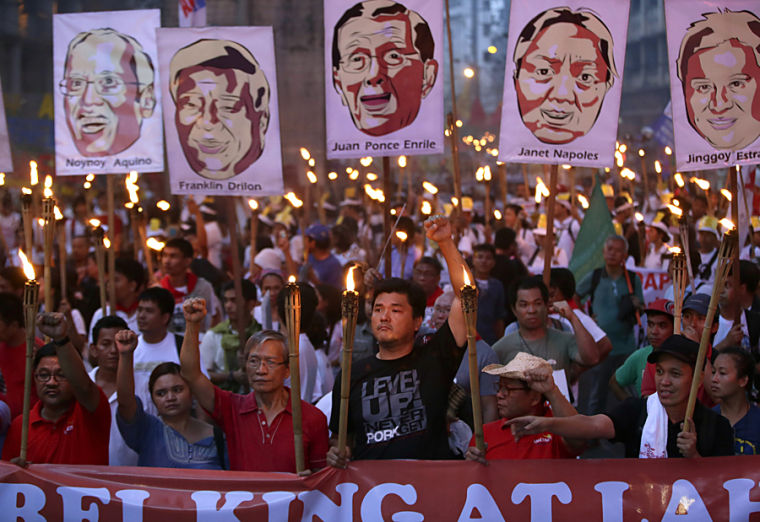
The Deep Roots of Corruption in the Philippines
Corruption in the Philippines is a complex issue that goes beyond politics and laws. To truly understand its persistence, one must look at the moral patterns that shape daily life. The country is a nation of faith, yet it also grapples with dishonesty, patronage, and moral compromise. Every Sunday, millions of Filipinos attend Mass, pray for grace, and seek divine guidance. Yet on Monday, the same society tolerates deception, favoritism, and abuses of power as if they were part of ordinary life.
This is not simply hypocrisy. It is a sociological paradox that the most devoutly Christian nation in Asia continues to struggle with systemic corruption. Christianity has deeply influenced Filipino culture, shaping festivals, language, and even politics. However, while faith permeates identity, it often functions more as culture than conviction. Religion comforts but rarely confronts. It soothes the conscience but seldom provokes reform.
As a sociologist, I see this gap between belief and behavior. Filipino Christianity is often practiced as belonging rather than becoming. Faith marks one as part of a community but not necessarily as a participant in moral transformation. It provides symbols and rituals yet sometimes lacks the power to reshape social structures. The result is a kind of cultural Christianity that thrives in devotion but falters in discipline, a faith strong in sentiment but weak in consequence.
Corruption cannot be understood only as greed or theft. It is woven into social systems that blur the line between compassion and compromise. A favor for a friend, a shortcut for convenience, a job for a relative—these can all be justified in the name of care or necessity. In this moral economy, values like pakikisama (getting along), utang na loob (debt of gratitude), and hiya (sense of shame) become guiding principles. These are not evil in themselves, but when distorted, they protect wrongdoing instead of discouraging it. We become silent for the sake of harmony, loyal for the sake of kinship, and complicit for the sake of belonging.
Here lies the heart of the sociological problem. Corruption survives not simply through the powerful but through the consent of the ordinary. It is sustained by a culture that confuses kindness with tolerance and faith with resignation.
Christianity was meant to redeem this weakness. The gospel offers not only personal salvation but also a vision of social renewal. Christ preached compassion, yes, but also courage. His call was to justice, honesty, and love that transforms. Yet Filipino Christianity has often settled for comfort over conviction. We pray for a better nation without confronting the injustices that make it worse. We admire the humility of Christ while ignoring His boldness to challenge hypocrisy. Faith becomes a refuge from the world rather than a force to renew it.
The Church, as both a spiritual and cultural institution, occupies a central place in this moral landscape. Its authority is vast, yet it, too, struggles with silence. Homilies speak of sin but rarely of systems. Sermons remind us of heaven but hesitate to name the hells we create here on earth. To be fair, many priests and lay leaders stand courageously for truth and justice. But as an institution, the Church must recover its prophetic voice to remind the faithful that worship without witness is hollow and that prayer without reform is incomplete.
What the Philippines needs is not merely stricter laws but stronger consciences. The renewal we seek is not only institutional but also spiritual and cultural. Integrity must again be seen as a form of social strength, not a liability. The honest must be honored, not mocked. The moral courage to say no in a society of convenience must become the new standard of patriotism.
Christianity, in its essence, is a call to conversion, not only of the soul but of society itself. It asks the believer to embody truth, justice, and compassion in every sphere of life. Our problem is not the absence of faith but the failure to live it beyond the pew. We must reclaim the moral power of Christianity, not as a badge of identity, but as a way of life that resists corruption at every level.
Corruption is not destiny. It is culture, and culture can change. But such change requires more than outrage. It requires conscience. The gospel reminds us that transformation begins in the heart but must never end there. Faith that does not seek justice is sentimentality. Justice that ignores faith is emptiness. Only when faith becomes action and conviction becomes culture will the Philippines finally reconcile its Christianity with its integrity.
