Pinky Amador Calls 'Quezon' Team as Clever as Their Anti-Hero
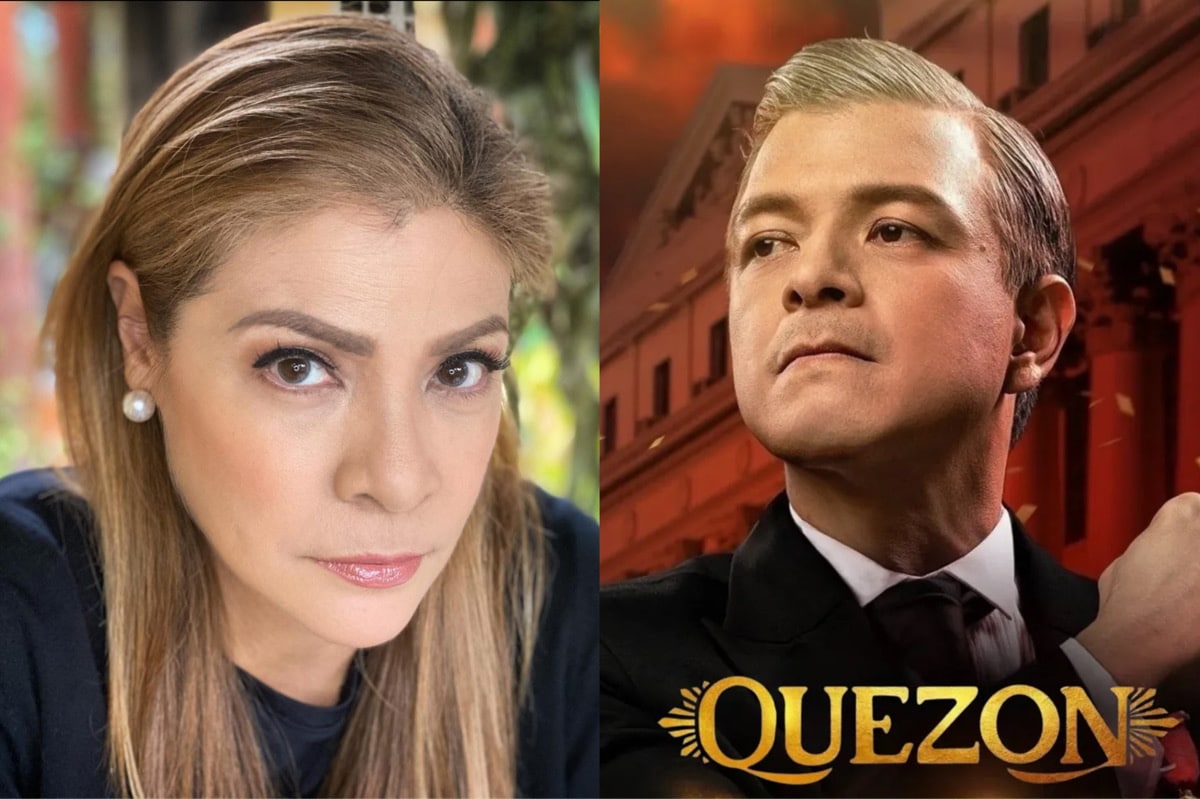
Pinky Amador, a descendant of the late former President Manuel L. Quezon, expressed her disappointment with the creators of the “Quezon” biopic, claiming that they have "weaponized history according to their narrative for sales."
Following the recent outburst from her uncle Ricky Avanceña, the actress shared her similar sentiments through her Instagram page on Monday, Oct. 27.
“Manuel L. Quezon Tinokhang sa Pelikula: History Weaponized,” she began her post.
Amador first acknowledged the positive aspects of the historical film such as the editing, pacing, use of devices, and performances of the cast.
“My theory is that because this is the third installment of their so-called Bayaniverse, naturally, they wanted to go out with a bang. Make an even bigger, bolder statement, get more traction which equals to sales,” she said. “How to do that? Sensationalism. Shock value. Alternative treatment.”
Amador described the movie as a “mammoth project” that has the “machinery to debunk any argument made against the film.”
She further stated that the Department of Education’s (DepEd) endorsement of the biopic raises concerns given the current educational crisis in the country.
“When you get DepEd to endorse this as an ‘educational’ film, the perception is that it will be (at the very least) slightly historical. When you add layers of ‘fiction’ and ‘satire’ then purposefully BLUR those lines with your creative treatment, then you are weaponizing history according to your narrative for sales,” she argued.
“I also get that this treatment can encourage deeper conversation and debate. But for whom? Only the learned and intellectuals?” she added. “We are in an educational crisis… So when DepEd-endorsed films become the only education for millions, showing only one side isn’t just poor storytelling—it’s miseducation.”
Amador then emphasized that this issue is personal for her as she witnessed how her grandmother Maria Zeneida “Nini” Angara Quezon Avanceña, the late president’s daughter, fought against tyranny during the Marcos regime.
“If she [Nini] were still with us, would the producers have the gall to show this to her? It would certainly have sent her to her death. I wonder would they be prepared to have blood on their hands of a life-long human rights advocate?” she wrote.
Accountability
Amador further stressed, “Artistic freedom does not excuse you from artistic accountability.”
She also pointed out how the film should have shown the struggle, emotional and psychological crisis, and torment the late president had, and not just him as a “cunning politician.”
“Sana lang hindi niyo rin maranasan na ang ninuno niyo o sinumang nagbigay ng inspirasyon sa inyo ay siraan or worse, kayo na mismo (pag matagal nang patay) ay gawan ng ganitong demolition job in the name of artistry,” she stated.
(I wish you, your ancestors or anyone you look up to do not experience this same slander and demolition job in the name of artistry.)
“I surmise that the creatives of this film are just as cunning, machiavellian and manipulative as the anti-hero they produced,” she added.
“Quezon,” directed by Jerrold Tarog and starring Jericho Rosales, premiered in local theaters last Oct. 15.
Key Points of Concern
- Historical Accuracy: The film has been criticized for potentially distorting historical facts to create a more sensational narrative.
- Educational Impact: The endorsement by the Department of Education raises concerns about the film's influence on students and its potential to mislead.
- Artistic Responsibility: The creators are being called out for not taking full responsibility for the impact of their work, especially when it comes to portraying historical figures.
- Personal Connection: For Pinky Amador, the issue is deeply personal, as she has seen firsthand the struggles of her family members during significant historical events.
- Public Reaction: The backlash from the public and critics highlights the importance of respecting historical narratives and the responsibility that comes with creating content based on real events.
Implications for Future Projects
The controversy surrounding the “Quezon” biopic serves as a reminder of the power that media holds in shaping public perception. As filmmakers continue to explore historical stories, there is a growing need for sensitivity and accuracy. This incident may prompt discussions on the ethical responsibilities of creators when dealing with sensitive topics and historical figures.
Moreover, the debate around the film underscores the importance of critical thinking among viewers. Audiences must be encouraged to question what they see and understand the context behind the narratives presented to them. This is especially crucial in an era where misinformation can spread rapidly.
In conclusion, while artistic freedom is essential, it must be balanced with a sense of responsibility towards the truth and the legacy of those who came before us. The “Quezon” biopic has sparked a necessary conversation about the role of media in preserving history and the impact it can have on future generations.
